About
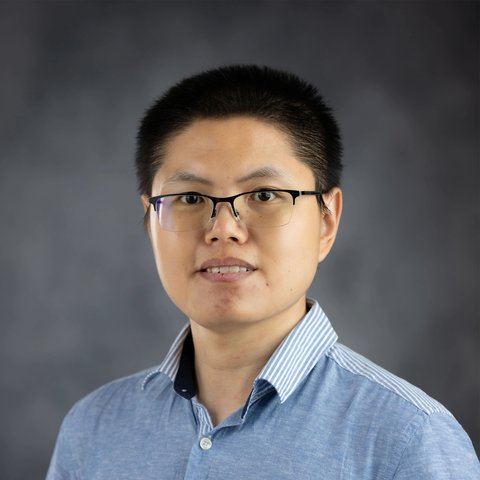
Position
Eric and Wendy Schmidt AI in Science Postdoctoral Fellow (2026–2028), Michigan Institute for Data and AI in Society (MIDAS), University of Michigan, in the 2026 cohort (my MIDAS profile). Mentors: Camille Avestruz (AI mentor, Physics; her group, ALCCA) and Feige Wang (science mentor, Astronomy; HURON).
Team memberships
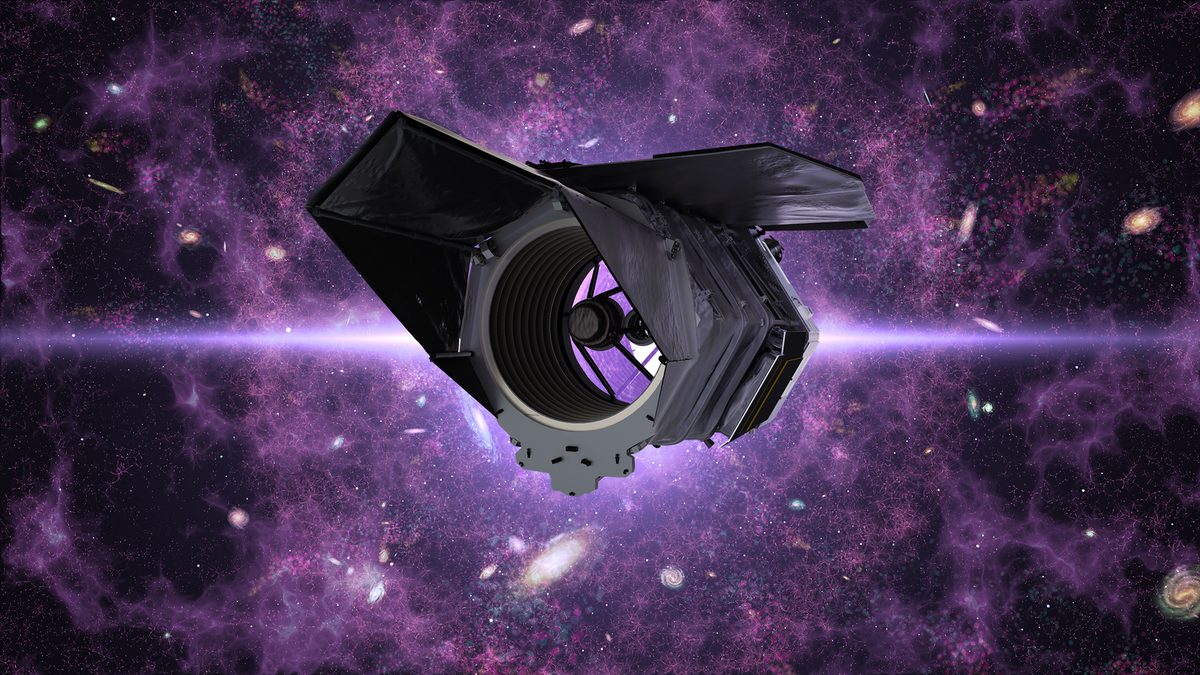
- Maximizing Cosmological Science with the Roman High Latitude Imaging Survey, a Roman Space Telescope Project Infrastructure Team led by Olivier Doré (2023–present): members · NASA team page
- Asteroseismology Using the Galactic Bulge Time Domain Survey, a Roman Space Telescope Wide-Field Science Team led by Marc Pinsonneault (2024–present)
- ALCCA (Avestruz Lab for Computational Cosmology and Astrophysics), the University of Michigan Physics group led by Camille Avestruz: Schmidt AI Fellow (2026–present)
- HURON (High-redshift Universe Research and Observation in New Generations), the University of Michigan Astronomy group led by Jinyi Yang and Feige Wang: Schmidt AI Fellow (2026–present)
- Center for Cosmology and AstroParticle Physics (CCAPP), The Ohio State University: graduate research assistant during my PhD (2023–2026)
Honors and funding
- Eric and Wendy Schmidt AI in Science Postdoctoral Fellowship, University of Michigan, 2026–2028.
- Research support as a member of NASA's Roman HLIS Cosmology Project Infrastructure Team and the Roman asteroseismology Wide-Field Science Team (as a PhD student).
Education
- PhD in Physics, The Ohio State University, 2026. Dissertation: Renovating Analysis Infrastructure for the Next Generation of Astronomical Surveys (defense slides, PDF).
- MS in Physics, The Ohio State University, 2023.
- Coursework in computer science and technology (31 credits), Nanjing University, 2020–2021.
- BA in French Language and Literature, Nanjing University, 2020.
- Visiting undergraduate student, Massachusetts Institute of Technology, 2019.
Teaching and mentoring
Teaching
- College Teaching (ESEPSY 7404), a graduate course at The Ohio State University, spring 2025. I planned a microteaching lesson by backward design, "Basic Counting: Permutations and Combinations," and taught it to my peers, most of them from outside mathematics (slides, PDF). The instructor scored it 33 of 35, and 14 classmates gave it a median of 48 of 50; one wrote that, as someone who is "NOT a math person," they "walked away having learned what you were trying to teach us."
- Tutoring in college mathematics and physics and in French phonology, and pro bono help with graduate school applications (2022–2024).
- I created and taught an online Python tutorial (2022–2023): 46 students in four cohorts, mostly first-time programmers from the humanities and social sciences, 28 of whom took an active part. I gave the lectures, designed the exercises and revised the study guide from students' feedback; its design is on Learning Python.
- Teaching associate (grader), graduate quantum mechanics (Physics 7501 and 7502), The Ohio State University, 2021–2023: grading with written feedback to the whole class, and office hours for Physics 7502 in spring 2023.
My approach to teaching is on Teaching Philosophy.
Backward design (diagram)
- Course goalswhat students should be able to do
- Learning outcomesgoals broken into steps I can check
- Class activitiesplanned to reach each outcome
Mentoring
- Roman HLIS Cosmology Project Infrastructure Team (2023–present): I help new graduate students and undergraduates get started with the PyIMCOM code, including a tutorial I gave at an internal hack week in 2025.
- Online Python tutorial (2022–2023): I mentored students' personal projects, real problems of their own, through to working code.
Projects I could offer students are on my Research Directions.
Notes for students
Service
- 2026–present: lead of MapHub, the MIDAS arXiv Preprint Hub, a carpentry of the Schmidt AI in Science Fellowship, with Kyle Heyblom, Eva Albalghiti and Dimitrios Simatos.
- 2025: gave a PyIMCOM tutorial at an internal hack week of the Roman HLIS Cosmology Project Infrastructure Team, to help new users get started with the code.
Skills and software
- Programming: Python (my main language; object-oriented, high-performance code with NumPy and Numba), C/C++, Fortran, Shell and Perl, Mathematica. Git and GitHub for all my projects.
- Scientific software: designing algorithms and refactoring research code into maintainable packages; image processing; numerical methods; stellar evolution codes (MESA, YREC).
- Survey pipelines and data products: image-coaddition software used in production by a Roman team (teammates ran PyIMCOM, which I refactored, to make the IMCOM coadds of the OpenUniverse2024 simulations, used in several team papers); configuration interfaces, documentation, onboarding and user support for a shared code: I have answered many of PyIMCOM users' questions and gave a tutorial at an internal hack week; a daily automated service with public data tables (MapHub).
- Data analysis and inference: large simulated survey data sets, systematic studies of algorithm settings, validation against simulated truth, Fisher forecasts, statistical modeling; machine learning in my research, with data science training from the Erdős Institute (see Training below); large language models, applied in MapHub during my AI in Science fellowship.
- Working with others: large collaborations (two Roman Space Telescope teams), code shared across a team, teaching and mentoring (see Teaching and mentoring).
- Training: 31 credits of computer science and technology at Nanjing University (2020–2021); the Erdős Institute Data Science Boot Camp (2025).
- Languages: Chinese (native), English, French.
My codes are listed on Software.
My codes and their research areas (diagram)
CV and contact
CV (PDF), updated October 2026; a short version (PDF) with first-author papers and selected talks; and a one-page résumé (PDF) for data science and software roles.
- Email: kailicao@umich.edu
- ORCID: 0000-0002-1699-6944
- GitHub: kailicao
I would be glad to hear from you about any of my work, including ideas that are not on this site yet.
Working with me
I am especially glad to talk about:
- AI in science, and how to make AI-assisted results checkable;
- image reconstruction, point spread functions and noise in survey images, including uses of Effortless beyond weak lensing and beyond Roman;
- cosmological forecasts and inference for Roman and other surveys;
- red giant stars: asteroseismology, stellar models, and Roman's Galactic Bulge Time-Domain Survey;
- any of the ideas on my research pages that you would like to develop together.
Invitations. I am happy to give seminars and journal-club talks, in person or online, and to join collaborations on specific projects.
Students. I do not have funding to hire students or postdocs of my own, but I am glad to talk with students interested in these topics, to share what I learned applying for fellowships (see Career Development), and to help with Python (start with Learning Python). How I mentor is on Teaching Philosophy. If you are a student, in the US or elsewhere, and would like to do a research project on one of these topics, please write to me first. Where it would help, I can introduce you to my faculty mentors at Michigan, Camille Avestruz and Feige Wang, or to my PhD advisors at Ohio State, Christopher Hirata, Marc Pinsonneault and David Weinberg, and I may be able to put in a good word for you.
Writing to me. A short email that says who you are and what you would like to discuss works best. I usually try to reply within a few working days.
Terms on this page (2)
- Carpentry
- In the Schmidt AI in Science fellowship, a small project that uses AI. MapHub is one.
- Hack session, hack week
- A short event, from a few hours to a week, in which people work together on code or data, often helping newcomers get started.