Cosmology
Surveys of galaxies let us test cosmological models through the large-scale structure of the Universe. Weak gravitational lensing, a main science driver of Roman's High-Latitude Wide-Area Survey (whose imaging part is the High Latitude Imaging Survey), measures that structure through the tiny distortions it imprints on the shapes of distant galaxies. My work on cosmology runs from forecasts of what such surveys can tell us to the simulations and numerical methods that connect theory with observation.
In forecasts for Roman's imaging survey, I found that external priors on the shape of the matter power spectrum improve the figures of merit by factors of 1.2 to 3.5 (Cao et al. 2026). For simulations, I developed ContEvol, a family of implicit numerical methods that give continuous solutions, from orbits to the Schrödinger equation (Cao 2025).
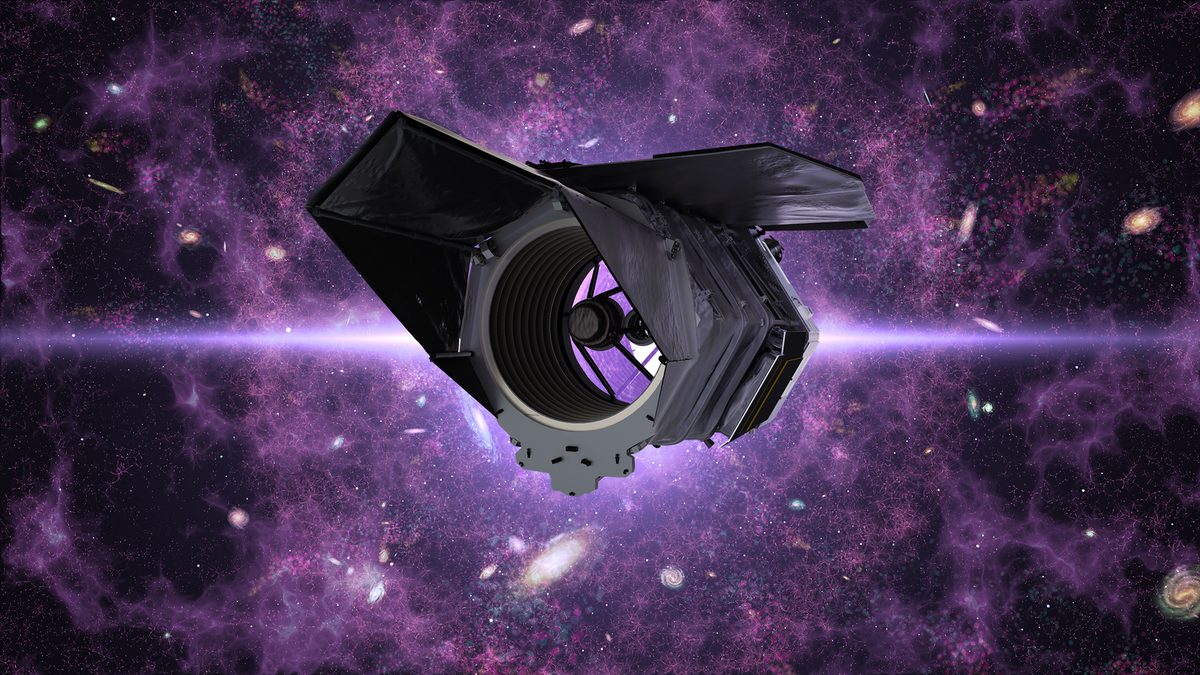
- Cosmological Inference: What surveys like Roman's can tell us about the Universe, and how to extract it.
- Cosmological Simulations: Simulations of cosmic structure, and the numerical methods that run them.
All my papers, with what I contributed to each, are on Publications. New to the topic? The Glossary explains the terms in plain language.