Stars
Stars are the clocks and scales of the Universe: their ages date the history of the Milky Way, and their masses and sizes calibrate much of astronomy. Surveys combining spectroscopy and asteroseismology now measure thousands of red giants, which lets us test the theory of stellar structure and evolution, and improve how we measure stellar masses and ages.
My work so far uses APOGEE spectroscopy and Kepler asteroseismology, combined in the APOKASC-3 catalog: I have compared stellar models with its red giants (Cao and Pinsonneault 2026) and corrected the asteroseismic masses of its luminous giants (Cao and Pinsonneault 2025). Next comes Roman's Galactic Bulge Time Domain Survey, where I am a member of the asteroseismology team: most of its asteroseismic targets will be near or beyond saturation, and DynFlux, an idea I hope to grow, aims at reliable photometry of saturated stars.
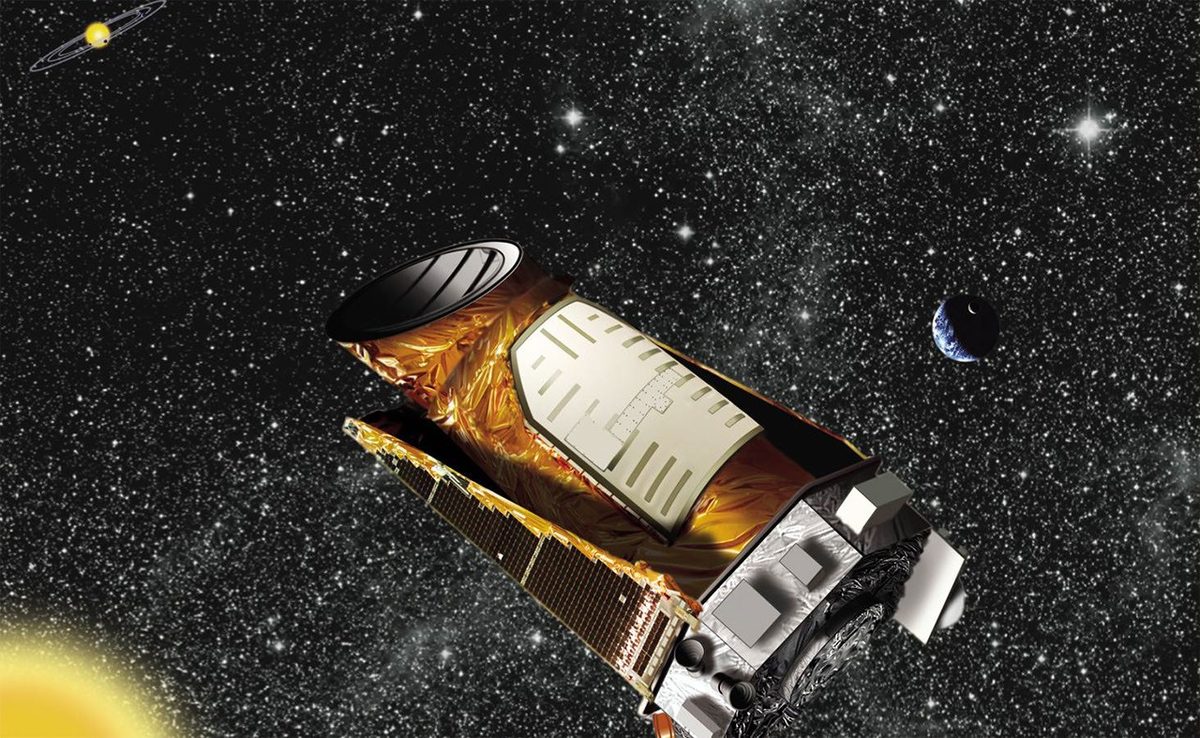
- Stellar Modeling: Testing stellar evolution models against thousands of observed red giant stars.
- Asteroseismology: Stellar oscillations as precise measures of stellar masses and ages, from Kepler to Roman.
All my papers, with what I contributed to each, are on Publications. New to the topic? The Glossary explains the terms in plain language.
Terms on this page (3)
- APOGEE
- The Apache Point Observatory Galactic Evolution Experiment, a survey of the Sloan Digital Sky Survey that took infrared spectra of hundreds of thousands of stars, measuring their temperatures and chemical compositions.
- Kepler
- A NASA space telescope (2009–2018) that, in its main mission (2009–2013), measured the brightness of about 150,000 stars almost continuously for four years, mainly to find planets. Its light curves also revealed the oscillations of thousands of red giants.
- APOKASC-3
- A catalog that combines APOGEE spectroscopy with Kepler asteroseismology for more than 15,000 evolved stars, mostly red giants. "3" is its third release.